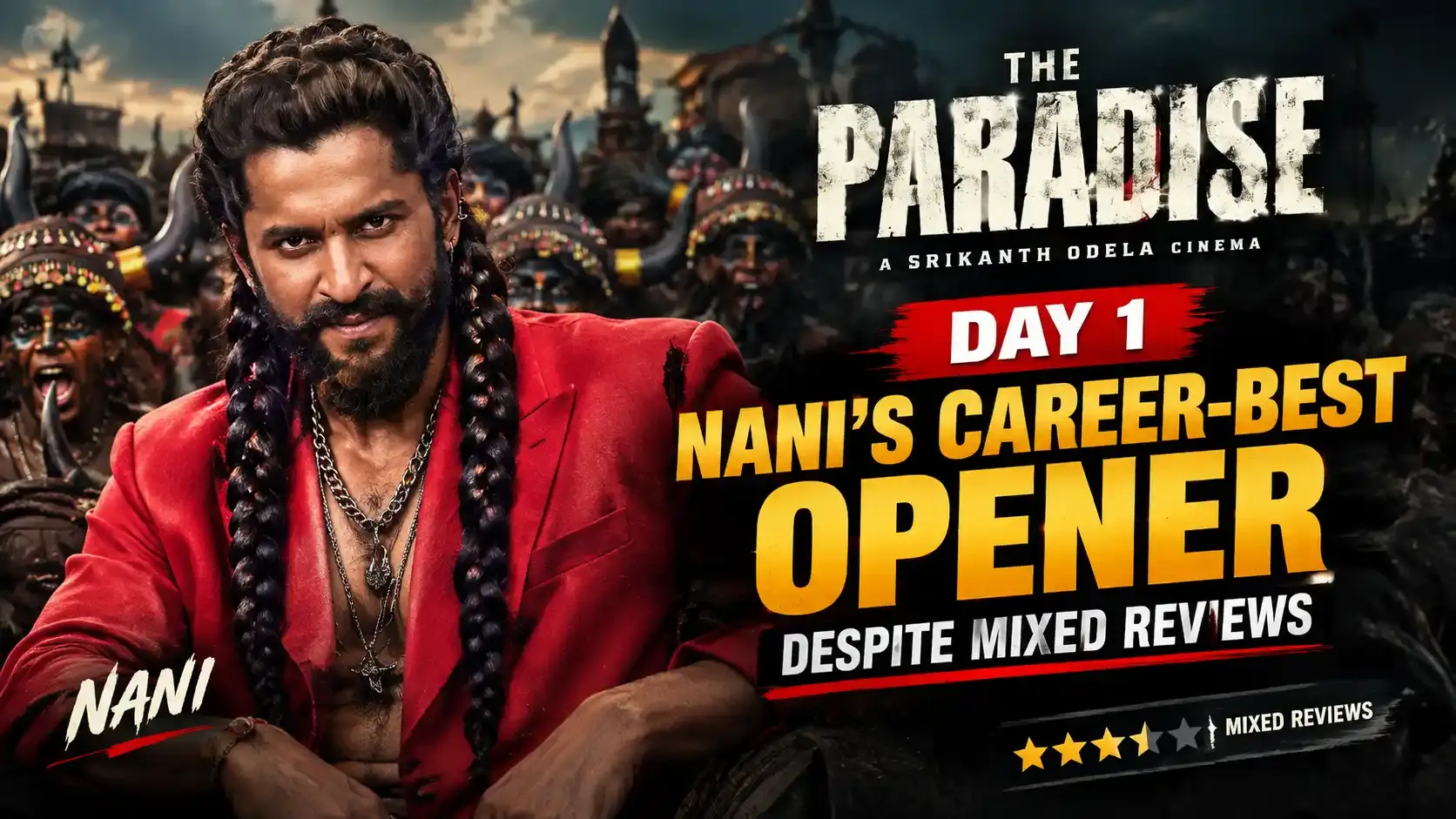
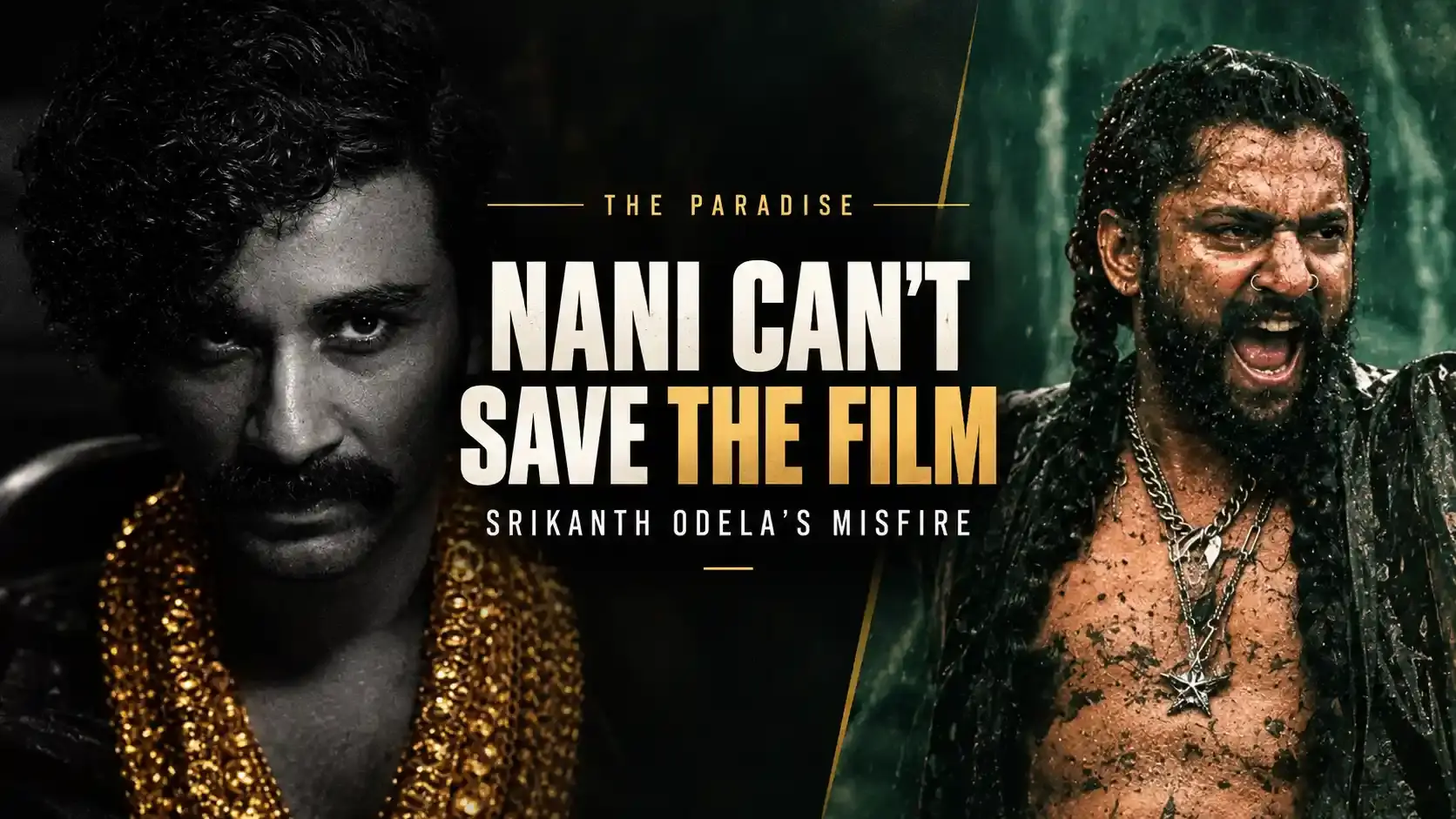
The Paradise, Nani's second collaboration with Dasara director Srikanth Odela, arrived on September 24 as a bigger, darker, Anirudh-scored rebellion epic set around a marginalised community in 1980s Secunderabad. The opening weekend money showed up. The reviews largely didn't. The recurring verdict is blunt: Nani is in beast mode, and the film around him still feels unfinished.
What is The Paradise actually trying to be?
On paper, the pitch is clear enough. District and trade copy frame it as a story of a man forged by violence who rises against oppression in a ruthless world where survival has a price. Sacnilk's synopsis lands more specifically: in 1980s Secunderabad, a marginalised tribe fights discrimination and citizenship under an unexpected leader. Nani plays Jadal — named for his plaits — with Kayadu Lohar, Sonali Kulkarni, Mohan Babu, Raghav Juyal, and Sampoornesh Babu around him. Odela writes and directs; Anirudh Ravichander scores; runtime sits around 2 hours 54 minutes with an A certificate.
That is a heavier canvas than the "Natural Star" family-friendly lane Nani built his early reputation on. It's also a deliberate sequel of sorts to Dasara — not in story, but in creative partnership and political temperature. Dasara wasn't perfect, but it established emotional conflict around caste hierarchies and Telangana's coal-mine world. The Paradise was supposed to prove Odela could go larger without losing that grip. Most reviews argue he went larger and lost the grip.
What are critics actually agreeing on?
The consensus is unusually consistent for a big Telugu release:
- Nani is the film's best argument. India Today, The Hindu, Times of India, and 123Telugu all single out his physical transformation and commitment. He drops the approachable warmth, plays guarded and brutal, and holds fight stretches that reviewers say actually work.
- The screenplay doesn't. Chapter titles like "Womb of Scars," "Butterfly," and "Womb of War" were meant to give sprawl a shape. Multiple critics say they make the film feel chopped instead. India Today called it fragmented; The News Minute argued the chapter structure borrows Tarantino's look without earning Tarantino's rhythm.
- The supporting cast is underwritten. Mohan Babu's Malik is repeatedly called a weak antagonist. Raghav Juyal doesn't read as intimidating. Kayadu Lohar's Subbu / butterfly motif gets flagged as thin or, in harsher reads, decorative. Sonali Kulkarni is the supporting player most reviews treat with some warmth, even when her mother arc is called predictable.
- Violence is doing too much of the talking. The News Minute's line is the sharpest version of this complaint: the film wants to be both revenge drama and oppression story, then substitutes volume of brutality for emotional investment in the people being hurt.
123Telugu's 2.75/5 is a useful midpoint of the reaction — not a total wipeout, not a pass. Praise for Nani, music cues, and the pre-interval stretch; disappointment that the larger promise never arrives.
Why does the Dasara comparison hurt this film so much?
Because Dasara set a specific expectation Odela can't un-set. That film proved he could build a lived-in community, invent power dynamics you feel before anyone explains them, and still deliver mass-action payoff. Times of India's Paradise review actually gives him credit for doing some of that again in the first half — the Savari world, the hierarchy, Jadal's gradual hardening — then says the second half fails the expectation that buildup created.
That's a worse failure mode than a film that never builds anything. Audiences and critics can forgive a flat first hour if the second explodes. They are less forgiving of a first half that earns trust and a second half that spends it on noise. When The Hindu says several potentially interesting characters "fail to make the desired impact," it's really saying the Dasara skill — making side people matter — didn't travel with the scale.
Did skipping the trailer make the critical hit worse?
Maybe not worse — but it made the gap louder. Nani said before release that there would be no theatrical trailer, that the team collectively chose the movie over one more cut, and that he didn't want The Paradise labelled a pan-India film even with multi-language versions. Telugu was the "prime target."
That strategy can work when the finished film is the surprise. Here, the surprise a lot of viewers got was runtime and chaos. Marketing that refuses to preview the product asks for trust. Reviews that call the product a muddle spend that trust immediately. The career-best opening suggests fans still prepaid that trust in tickets. The notices suggest they may not renew it for friends.
Is this just critics being harsh on a mass film?
Not really. Even the more generous trade-facing notes keep landing on the same practical audience problem: fight blocks and Nani can entertain in stretches, but a nearly three-hour film needs a clean spine. If the villain never feels formidable, if the community story never gets specific enough to hurt, and if the chapters don't actually reorganise the story, "mass" becomes a costume the film puts on rather than a gear it shifts into.
There's also a thematic risk that matters more than star ratings. When a film about oppression leans hard into atrocity spectacle, critics aren't being precious — they're asking whether the film respects the suffering it wants credit for depicting. That question is going to follow The Paradise into weekend word of mouth whether or not APTG numbers hold.
What's confirmed versus what's still settling?
Confirmed: theatrical release on September 24, 2026; Nani–Odela–Anirudh collaboration; multi-language rollout with Telugu as the commercial core; no theatrical trailer by the team's own admission; strong Day 1 collections; broadly mixed-to-negative critical reception that still praises Nani. Still settling: exact reconciled overseas gross, whether weekend holds survive the notices, and whether the film finds a second life among audiences who care more about Nani's mass turn than narrative cohesion.
For the money side of this split, see The Paradise's career-best Day 1 numbers. For how other 2026 openers have held or collapsed once the first-day glow wore off, see Toxic's Monday crash and Haiwaan's weak Akshay start.